


ALIMUS: Climate-sensitive nutrients, undernutrition and malaria
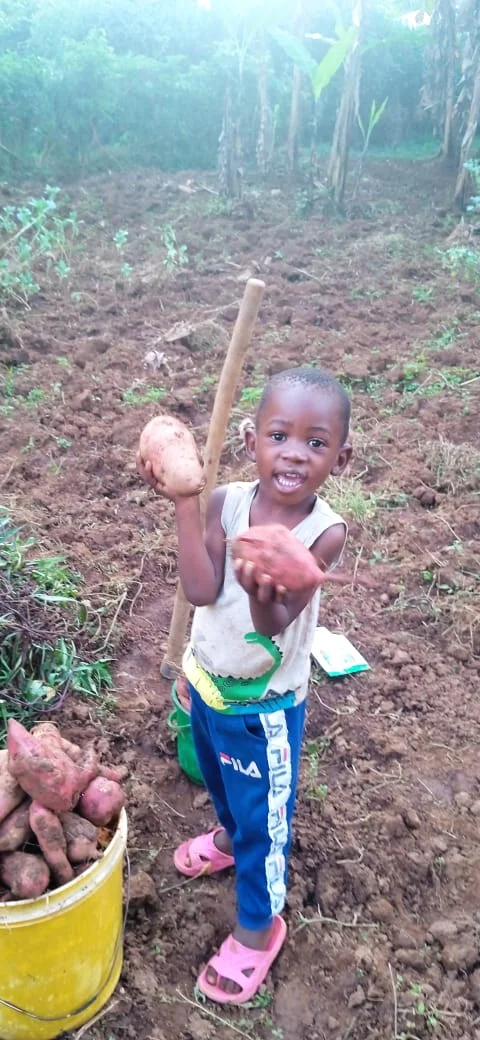
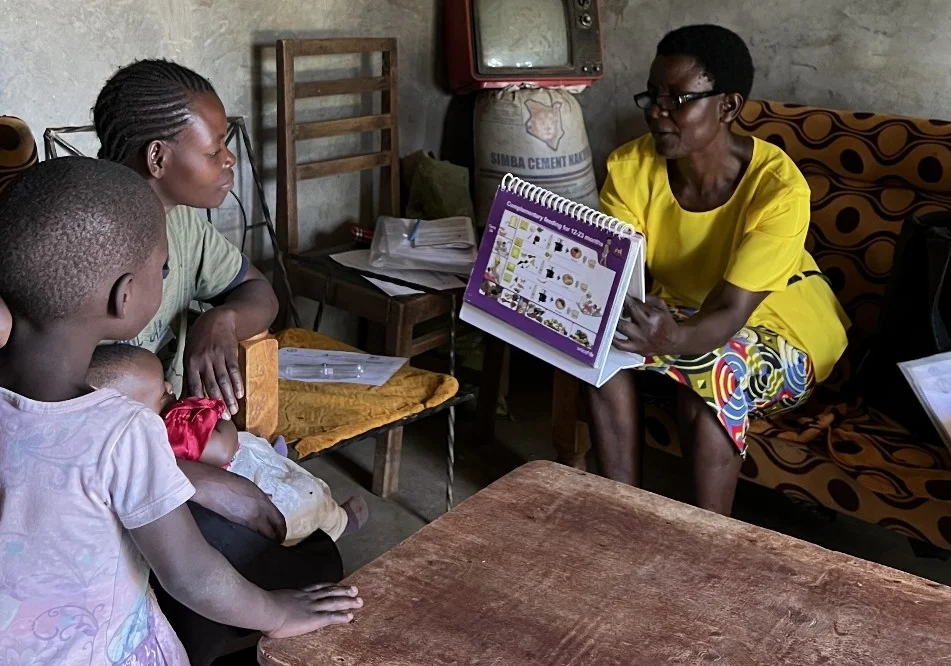
This project is part of the larger Research Unit “Climate Change and Health in sub-Saharan Africa”, for which Ina Danquah serves as the spokesperson. This subproject addresses the forecasted agricultural losses based on the current CO2 emissions until 2050 and their consequences for the nutritional status of children under-5 years of age living in two selected regions of sub-Saharan Africa. The subproject determines the potential of an integrated agriculture and nutrition program as an adaptation strategy to improve the children’s nutritional status for climate-sensitive nutrients in rural Burkina Faso and Kenya, where climate change will impact agriculture most strongly. The intervention focuses on bio-diversification of subsistence farming by home gardens, and is accompanied by nutrition and health counselling using the 7 Essential Nutrition Action messages by the World Health Organization. For sub-Saharan Africa, bio-diversification constitutes one of the most promising and practicable adaptation strategies for CO2-dependent agricultural losses, for both, the absolute amounts of crops and for the plant contents of protein, iron and zinc. As a novelty, P2 identifies the controversially discussed, potential effects of such an agriculture and nutrition program on the risk of clinical malaria in children under-5 years of age.
Countries: Kenya, Burkina Faso
Methodology
In the first project phase, the adaptation program was tailored to the needs of the Kenyan region in collaboration with Siaya County Ministries of Health and Agriculture and the non-governmental organization Centre for African Bio-Entrepreneurship (CABE). We determined the horticultural crops to be cultivated and the practicability and the acceptability of the program. A cluster-randomized controlled trial with 2 x 600 households was implemented. We recruited households with children at the age of complementary feed introduction (6-24 months) and followed them up for 1 year. In phase 2 of the project, we will establish the effects of the intervention program on changes in dietary habits, the status of climate-sensitive nutrients, and the risk of clinical malaria among the children after 2 years. We will define the necessary investments to scale-up such intervention programs to the provincial, state, and national levels. Lastly, we will generate adaptation-response functions characterizing the effects of the agricultural bio-diversification and nutrition counselling program under future climate scenarios.
Main Cooperation Partners
-
Dr. Erick Muok and Dr. Stephen Munga, Kenya Medical Research Institute (KEMRI)-Kisumu, Center for Global Health Research (CGHR), Kisumu, Kenya
-
Dr. Ali Sié, Centre de Recherche en Santé de Nouna (CRSN), Nouna, Burkina Faso
-
Prof. Till Bärnighausen, Prof. Manuela De Allegri, Prof. Joacim Rocklöv, Dr. Sandra Barteit, Dr. Aditi Bunker, Heidelberg Institute for Global Health (HIGH), Heidelberg University, Heidelberg, Germany
-
Prof. Harald Grethe, International Agricultural Trade and Development, Humboldt University Berlin (HUB), Berlin, Germany
-
PD Dr. Martina Maggioni, Institute for Physiology, Charité – Universitaetsmedizin Berlin, Berlin, Germany
-
Prof. Christoph Gornott, Prof. Hermann Lotze-Campen, Dr. Katja Frieler, Dr. Fred Hattermann, Potsdam Institute for Climate Impact Research (PIK), Potsdam, Germany
-
Prof. Penelopé Vounatsu, Swiss Tropical and Health Institute (Swiss TPH), Basel, Switzerland
-
Prof. Harald Kunstmann, Karlsruhe Institute for Technology (KIT), Garmisch-Partenkirchen, Germany
Main Funding Partners
-
German Research Foundation (DFG) – FOR2936 Climate Change and Health in sub-Saharan Africa (Kenya)
-
Robert Bosch Foundation (RBS) – Robert Junior Professorship 2019 (Burkina Faso)
Duration of the project
2 phases of each 3 years (01 Jan 2020 – 31 Dec 2025)
Publications
-
Kurniawan L, et al. Associations between climate-sensitive nutrients, clinical malaria, and anaemia among young children in rural Burkina Faso: An analysis of baseline data from a cluster-randomized controlled trial. Trop Med Int Health. 2025 [accepted 9th October 2025]
-
Kihagi GW, Hansen LS, Agure E, Muok EMO, Mank I, Danquah I, Sorgho R. ‘Counselling is not just providing information’: perceptions of caregivers and stakeholders on the design of nutrition and health counselling interventions for families with young children in rural Kenya. BMC Health Serv Res. 2024;14(1):597.
-
Hansen L-S, Wothaya Kihagi G, Agure E, Muok EMO, Mank I, Danquah I, Sorgho R. Sustainable home gardens in Western Kenya: A qualitative study for co-designing nutrition-sensitive interventions. J Rural Studies. 2023 Sep 18;103:103132. doi:10.1016/j.jrurstud.2023.103132
-
Beloconi A, Nyawanda BO, Bigogo G, Khagayi S, Obor D, Danquah I, Kariuki S, Munga S, Vounatsou P. Malaria, climate variability, and interventions: modelling transmission dynamics. Sci Rep. 2023 May 5;13(1):7367. doi: 10.1038/s41598-023-33868-8.
-
Mank I, Sorgho R, Zerbo F, Kagoné M, Coulibaly B, Oguso J, Mbata M, Khagayi S, Muok EMO, Sié A, Danquah I. ALIMUS-We are feeding! Study protocol of a multi-center, cluster-randomized controlled trial on the effects of a home garden and nutrition counseling intervention to reduce child undernutrition in rural Burkina Faso and Kenya. Trials. 2022 Jun 1;23(1):449.
-
Yeboah E, Kuunibe N, Mank I, Parisi D, Bonnet E, Lohmann J, Hamadou S, Picbougoum BW, Belesova K, Sauerborn R, Bärnighausen T, Danquah I, De Allegri M. Every drop matters: Combining population-based and satellite data to investigate the link between lifetime rainfall exposure and chronic undernutrition in children under five years in rural Burkina Faso. Environ Res Letters. 2022 Apr;17(5):054027
-
Hansen L-S; Sorgho R; Mank I; Schwerdtle P N; Agure E, Bärnighausen T, Danquah I. Home gardening in sub-Saharan Africa: A scoping review on practices and nutrition outcomes in rural Burkina Faso and Kenya. Food and Energy Security. 2022;00:e388.
-
Gottlieb-Stroh T, Souares A, Bärnighausen T, Sié A, Zabre SP, Danquah I. Seasonal and socio-demographic patterns of self-reporting major disease groups in north-west Burkina Faso: an analysis of the Nouna Health and Demographic Surveillance System (HDSS) data. BMC Public Health. 2021 Jun 9;21(1):1101.
-
Mank I, Vandormael A, Traoré I, Ouédraogo WA, Sauerborn R, Danquah I. Dietary habits associated with growth development of children aged < 5 years in the Nouna Health and Demographic Surveillance System, Burkina Faso. Nutr J. 2020 Aug 9;19(1):81.
-
Yeboah E, Bunker A, Dambach P, Mank I, Sorgho R, Sié A, Munga S, Bärnighausen T and Danquah I (2021). Transformative Adaptations for Health Impacts of Climate Change in Burkina Faso and Kenya. African Handbook of Climate Change Adaptation; 2485-2500.
Team
- Prof. Ina Danquah
- Anaïs Gonnet (project coordinator)
- Erick Agure (candidate PhD)
- Grace Wothaya Kihagi (candidate PhD)
- Sayouba Dianda (candidate PhD)
- Katharina Westphal (candidate Dr. med.)
- Dr. Raissa Sorgho
- Dr. Lukas Kurniawan
- Dr. Joshua Ntajal